Niklas Bühler
Escaping local optima on a random walk through life.

Table of Contents


🎓 Academic Publications

🩻 Large-scale Radiograph Pre-training

[2024-11-15 Fri]

pretraining.png

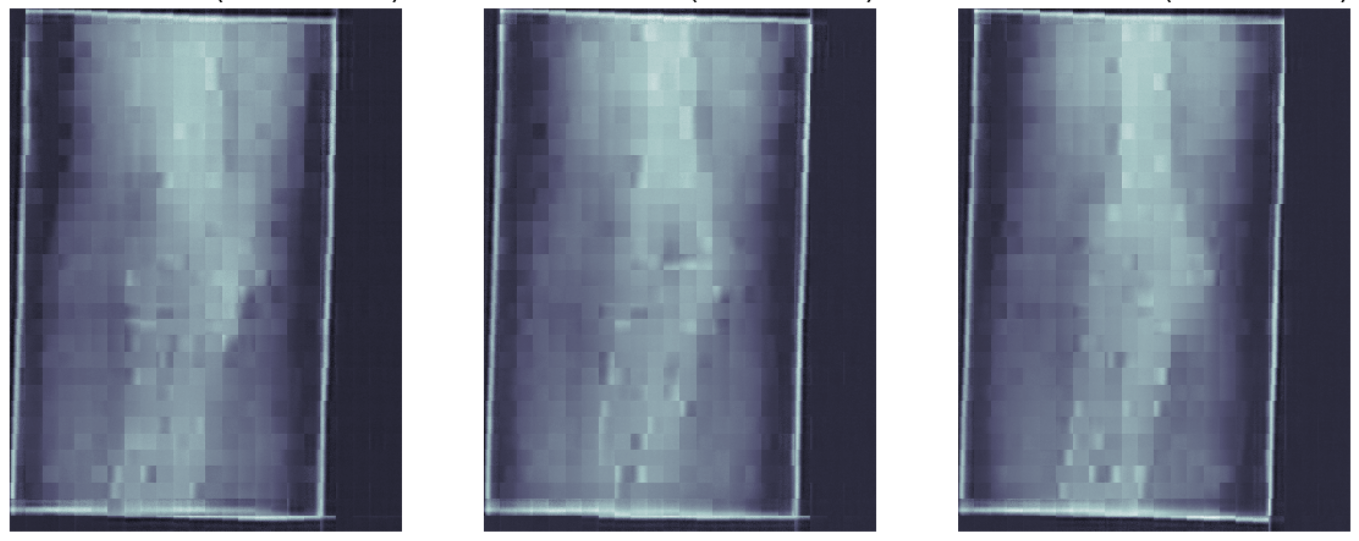
In recent years, medical imaging datasets have expanded significantly, offering great potential for the development of machine learning solutions in the medical field. However, manual labeling of medical data is costly and poses a significant bottleneck to their utilization.

Self-supervised learning (SSL) techniques offer a solution to this problem by extracting meaningful representations from the raw data itself, enabling label- and compute-efficient training of specialized models for downstream tasks. In this work, we demonstrate the effectiveness of SSL techniques, specifically the Masked Autoencoder (MAE) strategy, to generate such representations from a large-scale real-world clinical dataset comprising more than 600,000 radiograph images from various anatomical regions.

We introduce a novel Dynamic Batch Binning technique that reduces necessary compute by 80% when training on datasets with high image resolution variability. Our results across several clinically relevant downstream tasks show that the generated representations substantially reduce the dependence on labeled data. This is evidenced by superior performance when comparing to supervised training from scratch. Furthermore, we demonstrate the efficacy of domain-specific pre-training by achieving improved performance on the specialized medical task of fracture detection, compared to broader ImageNet-21k pre-training, despite using only 5% of its training samples and 0.5% of its training iterations during pre-training.

Our research thus demonstrates the potential of domain-specific MAE pre-training to significantly reduce the need for labeled training data in the medical domain, enabling a more effective utilization of large medical datasets with minimal labels.


🩻 Pilot Study for Large-scale Radiograph Pre-training

[2024-04-17 Wed]

irma.png

In recent years, medical datasets have expanded significantly, offering great potential for the development of machine learning applications in the medical field. However, manual labeling of such data is costly and poses a significant bottleneck to their utilization.

To address this issue, self-supervised learning (SSL) exploits the data itself to learn embeddings that can be quickly adapted to downstream tasks as needed.

In this work, we show the suitability of self-supervised learning techniques, specifically masked autoencoders (MAE), to generate such embeddings from a large clinical dataset comprising 12,000 radiograph images from various anatomical regions.

By pre-training a MAE model on producing these high-quality embeddings, the need for labeled data in downstream tasks is substantially reduced. This is evidenced by a linear classifier trained on representations from this MAE model achieving 84.58% top-1 accuracy on bodypart classification when using only 1% of data, marking a 7% relative improvement over fully supervised training.

This pilot study thus establishes the foundation for applying the MAE strategy to our own large-scale real-world radiograph dataset, comprising 700,000 radiograph images, as well as evaluating on more complex downstream tasks in future work.


🧬 Functional Gene Embeddings

[2024-02-08 Thu]

functional-gene-embedding.png

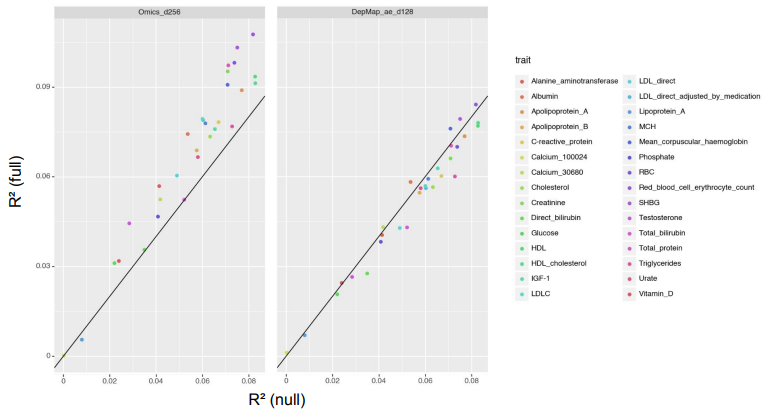
Functional gene embeddings, numerical vectors capturing gene functions, can provide useful representations of genes for downstream analyses. In this project, we extracted functional gene embeddings from transcription data and other genomewide measurements by using principle components, autoencoders and a Variational Deep Tensor Factorization model. We used these embeddings, as well as embeddings from other publications, as gene features in the prediction of genome-wide association study summary statistics for a diverse set of traits and compared their performances.


🧠 Connectome Informed Attention

[2023-02-16 Thu]

connectome-informed-attention.png

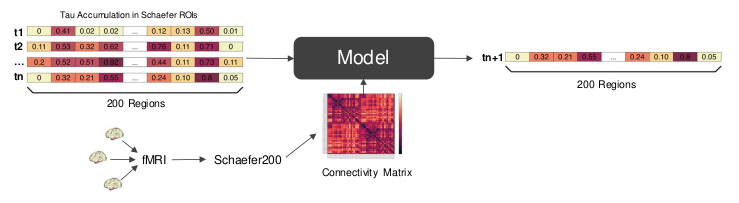
We predict tau spreading behavior for Altzheimer’s patients, based on a connectivity map and tau PET scans of the brain.


🧊 Bayesian Deep Learning – A Stochastic Dynamics Perspective

[2023-01-29 Sun]

bayesian-deep-learning.png

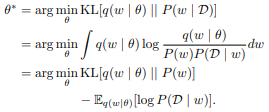
This report gives an overview of Bayesian deep learning from a stochastic dynamics perspective by first introducing Bayesian deep learning as well as two important methods for training Bayesian neural networks, and then building upon this fundament by presenting various approaches and variations inspired by stochastic dynamics.


🧬 Interpretable Mechanistic Models for Predicting Tissue-specific RBP Expression

[2022-07-25 Mon]

interpretable-mechanistic-models-notes.png

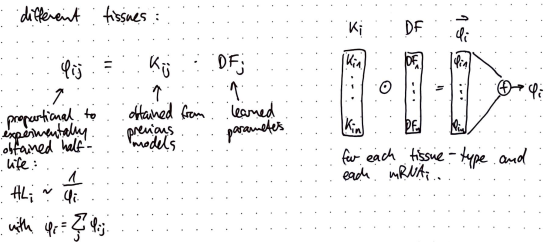
In this report, we predict expression patterns of different RNA-binding proteins across tissue types. As our results were mostly supported by the literature and experimental data, they could lead to discovery of previously unknown expression patterns of RBPs.


🧮 Formalism 101

[2022-01-04 Tue]

formalism.png


🗣️ Crosslingual, Language-independent Phoneme Alignment

[2021-10-01 Fri]

bachelor-thesis.png

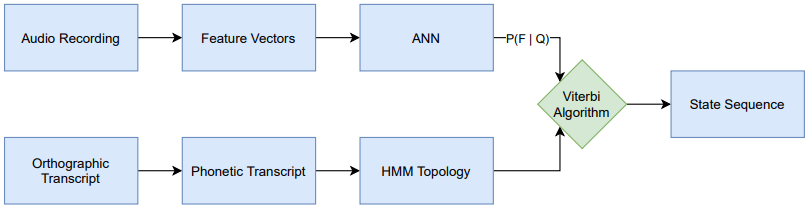
The goal of this thesis is to apply cross-lingual, multilingual techniques on the task of phoneme alignment, i.e. the task of temporally aligning a phonetic transcript to its corresponding audio recording. Three different neural network architectures are trained on a multilingual data set and utilized as a source of emission probabilities in hybrid HMM/ANN systems. These HMM/ANN systems enable the computation of phoneme alignments via the Viterbi algorithm. By iterating this process, multilingual acoustic models are bootstrapped and the resulting systems are used to cross-lingually align data from a previously unseen target language.


🤖 Can Computers Think?

[2021-08-04 Wed]

can-computers-think.png

Human intelligence has been the defining property of the human race for thousands of years. However, with the recent rise of machine learning, amplified by breakthrough results in deep learning, this opinion is cast in questionable light, as the opposing question starts to become more relevant and polarizing than ever before: Will computers be able to think in a way that is equivalent – or even superior – to ours?


🔏 Security Review

[2020-07-30 Thu]

security.png

A review of the most important definitions and results of the Security lecture given at KIT.


🌐 Graph Theory Review

[2020-02-20 Thu]

graph-theory.png

A review of the most important definitions and results of the Graph Theory lecture given at KIT.


♾️ Mächtigkeiten, Kardinalzahlen und die Kontinuumshypothese

[2019-12-17 Tue]

infinity.png

Summary of set-theoretical definitions and theorems for my presentation (which was done on blackboard).


🧫 Computation and Pattern Formation by Swarm Networks with Brownian Motion

[2019-07-22 Mon]

cells.png

Written report and presentation condensing multiple papers about the concept of Swarm Networks introduced by Isokawa and Peper.

Created: 2024-11-25 Mon 12:08